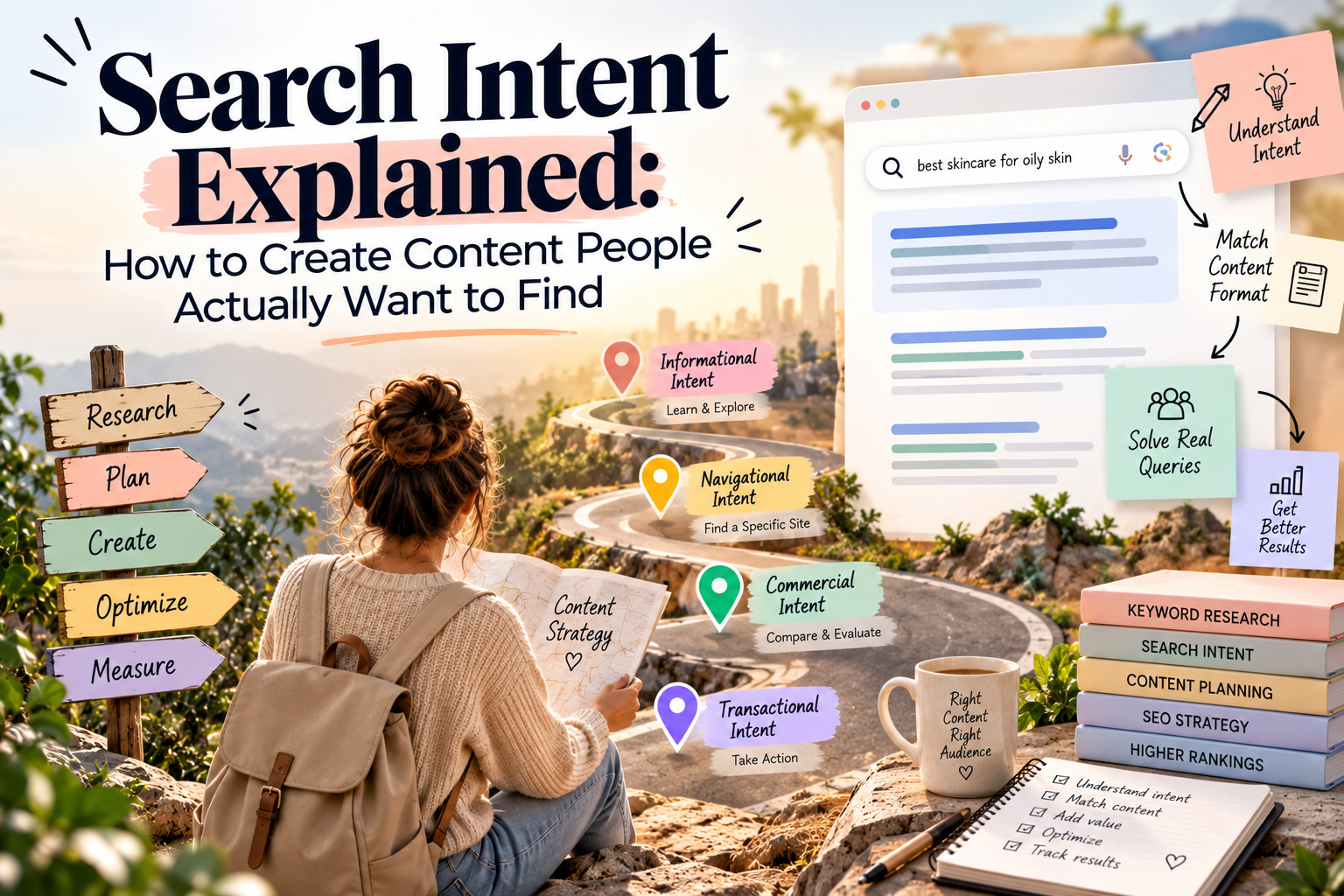
Search intent is the goal behind a search: what the person typing a query actually wants to learn, find, compare or do. Google ranks the pages that match that goal best, which is why a detailed article can lose to a simple price list. Matching search intent is the first job of every page you publish.
You may have seen this on your own site. A clinic spends a week on a thorough guide to laser hair removal, and it sits on page two while a short price page from across town ranks first. Google’s Search Quality Rater Guidelines ask raters to judge how well a page meets the needs behind a query, not how much it says.
Most pages that don’t rank don’t have a writing problem. They have an intent problem. This guide covers the four types of search intent, the READ Framework for matching them, and a 30-day plan to fix the pages you already have.
Key Takeaways
- Search intent is the reason behind a search, and Google ranks the pages that satisfy it best.
- The four main types of search intent are informational, navigational, commercial and transactional.
- Google’s quality rater guidelines group queries by what people want: to know something, do something, reach a website or visit a place.
- The READ Framework matches any page to its search intent in four steps: read the results, establish the intent, align the format and deliver the answer early.
- A page in the wrong format rarely ranks, so a quarterly intent review protects the traffic you’ve already earned.
How Does Google Read the Intent Behind a Query?
Google works out what a searcher means before it picks results. Its How Search Works pages explain that it analyzes the meaning of a query and looks for content that fits it. Its rater guidelines go further and sort queries by what the user wants to accomplish:
- Know – the user wants information, such as “what is a chemical peel.”
- Do – the user wants to complete an action, such as booking, buying or downloading.
- Website – the user wants a specific site or page, such as “idatecontent blog.”
- Visit-in-person – the user wants a place nearby, such as “dermatologist near me.”
SEO tools use slightly different labels, but the idea is the same. User intent decides the format Google wants to show as much as the topic does.
What Are the Four Types of Search Intent?
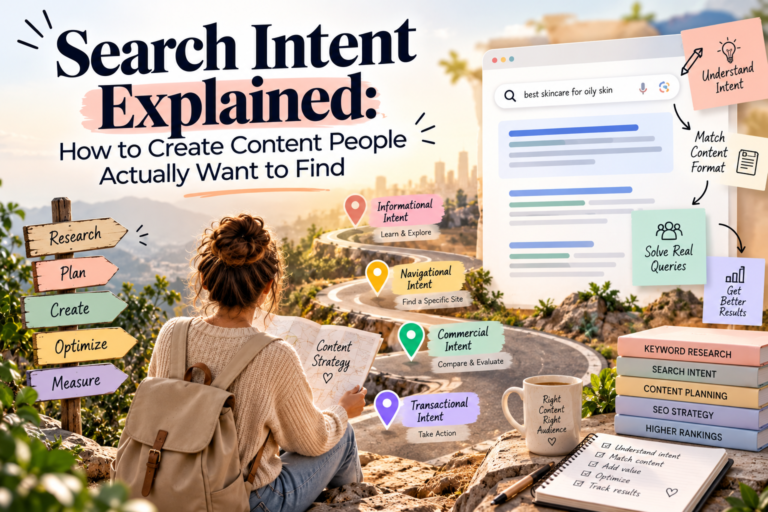
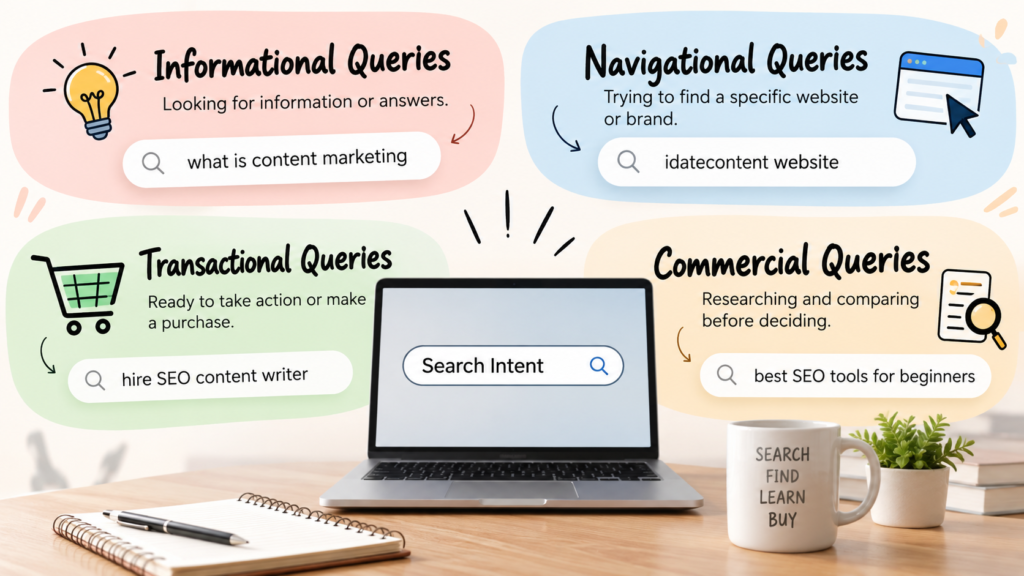
Most SEO tools group search intent into four types. A search can mix two, but one usually leads, and that’s the one your page should serve.
Informational intent
Informational intent covers questions like “what is a chemical peel” or “how does a home loan work.” The searcher isn’t ready to buy yet. They want a clear explanation, ideally with a quick answer at the top.
Guides, how-to posts and explainers rank well here. These pages build trust early, so each one should link to a logical next step, like a comparison or a service page.
Navigational intent
Navigational searches include a brand or site name, such as “HubSpot login.” The person knows where they want to go and uses Google as a shortcut.
You can’t win navigational search intent for another brand’s name. Make sure searches for your own brand lead to a clean homepage, an up-to-date Google Business Profile and clear service pages.
Commercial intent
Commercial intent shows up in searches like “best CRM for small business” or “HydraFacial vs chemical peel.” The person plans to buy soon but is still weighing options.
Comparisons, reviews and case studies work well for commercial intent. A B2B software brand that compares itself honestly against two alternatives, drawbacks included, earns more trust than a page that only praises its own features.
Transactional intent
Transactional searches include “book laser hair removal Gurgaon” or “2BHK flats for sale in Noida Extension.” The person wants to act now.
Service, pricing and booking pages rank for these searches, while long blog posts rarely do. Meet this search intent with a clear offer, a price range, proof and one obvious next step.
| Intent type | What the searcher wants | Example search | Content that ranks |
|---|---|---|---|
| Informational | To learn or understand | how does a home loan work | Guides, explainers, how-to posts |
| Navigational | To reach a specific site | HubSpot login | Homepage, brand and login pages |
| Commercial | To compare before buying | best CRM for small business | Comparisons, reviews, case studies |
| Transactional | To buy, book or inquire | book HydraFacial in Gurgaon | Service, pricing and booking pages |
Three Mismatches That Keep Good Pages Off Page One
When a well-written page won’t rank, one of three search intent mismatches is usually the cause:
- The wrong format – a blog post aimed at a transactional keyword. A 2,000-word explainer on buying property won’t rank for “3BHK flats in Sector 150 Noida,” because searchers want listings, prices and floor plans.
- A buried answer – the page reaches the point after five paragraphs of background. Readers leave, and AI tools pick a page that answers sooner.
- A one-sided comparison – a “vs” keyword answered with a page that praises only one option. Commercial intent needs balance, including honest drawbacks.
Fixing the mismatch often does more than adding words. Once intent is right, our content optimization checklist covers the remaining on-page checks.
The READ Framework for Matching Search Intent
The READ Framework is a four-step way to match any page to its search intent before you write or rewrite it: Read the results, Establish the intent, Align the format and Deliver the answer early.
R: Read the results page
Search your keyword in a private browser window and study the first page. Note the content types that rank, the angle (beginner, cost, comparison) and features like maps, videos or a “People also ask” box. Google has already tested what satisfies this search.
Before moving on, ask yourself three things. What type of page holds the top three spots? Is the searcher trying to learn, compare or act? What would they need to see in the first five seconds? Check results from the city you’re targeting, since local searches change by location.
E: Establish the intent type
Add an intent column to your keyword sheet and tag every term as informational, navigational, commercial or transactional. This search intent SEO habit takes minutes and stops you from writing a blog post for a keyword that needs a service page.
Trigger words help. “What,” “how” and “guide” usually signal informational intent. “Best,” “vs” and “review” signal commercial intent. “Price,” “book,” “buy” and a location usually mean the searcher is ready to act.
A: Align the format
Pick the format the results reward before you write a word. Informational keywords need guides or checklists, commercial keywords need comparisons with honest pros and cons, and transactional keywords need service or product pages with pricing and a clear call to action.
A real estate advisor targeting “ready to move vs under construction flats” should write a comparison. The same advisor targeting “ready to move flats in Gurgaon” needs a listings page. When results mix guides and service pages, build the type you can make best and link it to the other.
D: Deliver the answer early
Put the main answer, price range or offer in the first 40 to 60 words, then add detail. Short, direct answers are also what featured snippets and AI Overviews pull, which is where search intent meets answer engine optimization and GEO.
For “how long does a HydraFacial take,” open with the session time and what happens during it. Then link readers to the next stage of their decision, such as a treatment comparison or a booking page. Our guide on how to find content ideas shows how to find the questions buyers ask at each stage.
[Image: mid-post image showing the READ Framework for search intent]
A 30-Day Plan to Fix Search Intent on Existing Pages
You don’t need new content to start. Most sites gain more from fixing the search intent of pages they already have:
| Phase | What to do | Output |
|---|---|---|
| Days 1 to 7 | Export your top 20 pages and their main queries from Google Search Console, then label each query’s intent | An intent sheet |
| Days 8 to 14 | Search each main keyword, note what ranks, and flag pages whose format doesn’t match | A mismatch list |
| Days 15 to 24 | Fix the top five mismatches: rewrite openings, change formats or create the missing page type | Five updated pages |
| Days 25 to 30 | Link informational pages to commercial and service pages, then request indexing for the updated pages | A clear path from guide to inquiry |
After day 30, repeat the check every quarter, because results for the same keyword can change as people’s needs change. The same labels help your social media too: informational topics make strong carousels, commercial topics suit comparison posts and testimonials, and transactional topics belong in offers.
How Do You Know Your Pages Match Search Intent?
You’ll know your pages match search intent when four signals improve in the weeks after your fixes:
- Click-through rate – rising CTR in Search Console means your title and snippet now promise what searchers want.
- Average position – steady movement up for the page’s main queries.
- Engagement time – longer average engagement in GA4 shows readers found what they came for.
- Inquiries – more form fills or calls from organic visits, especially on commercial and transactional pages.
Give Every Search the Page It Expects
Search intent is the purpose behind a search, and matching it is the most reliable way to create content people actually want to find. Read the results, establish the intent, align the format and deliver the answer early. This week, pick your five lowest-performing posts, search their keywords and check whether each page type matches what Google shows.
If you’d like help mapping search intent across your site, idatecontent plans and writes content that fits what your customers are searching for, from blog guides to service pages. Whether you work with us or another SEO agency in Gurgaon, ask to see an intent map before any content gets written.