Your blog writer is working on a post about skin boosters. Your social media manager is planning Reels about a festive offer. Your SEO agency is building links to a service page you aren’t promoting anywhere else. Everyone is busy, the monthly spend keeps rising, and none of it seems to add up to more enquiries.
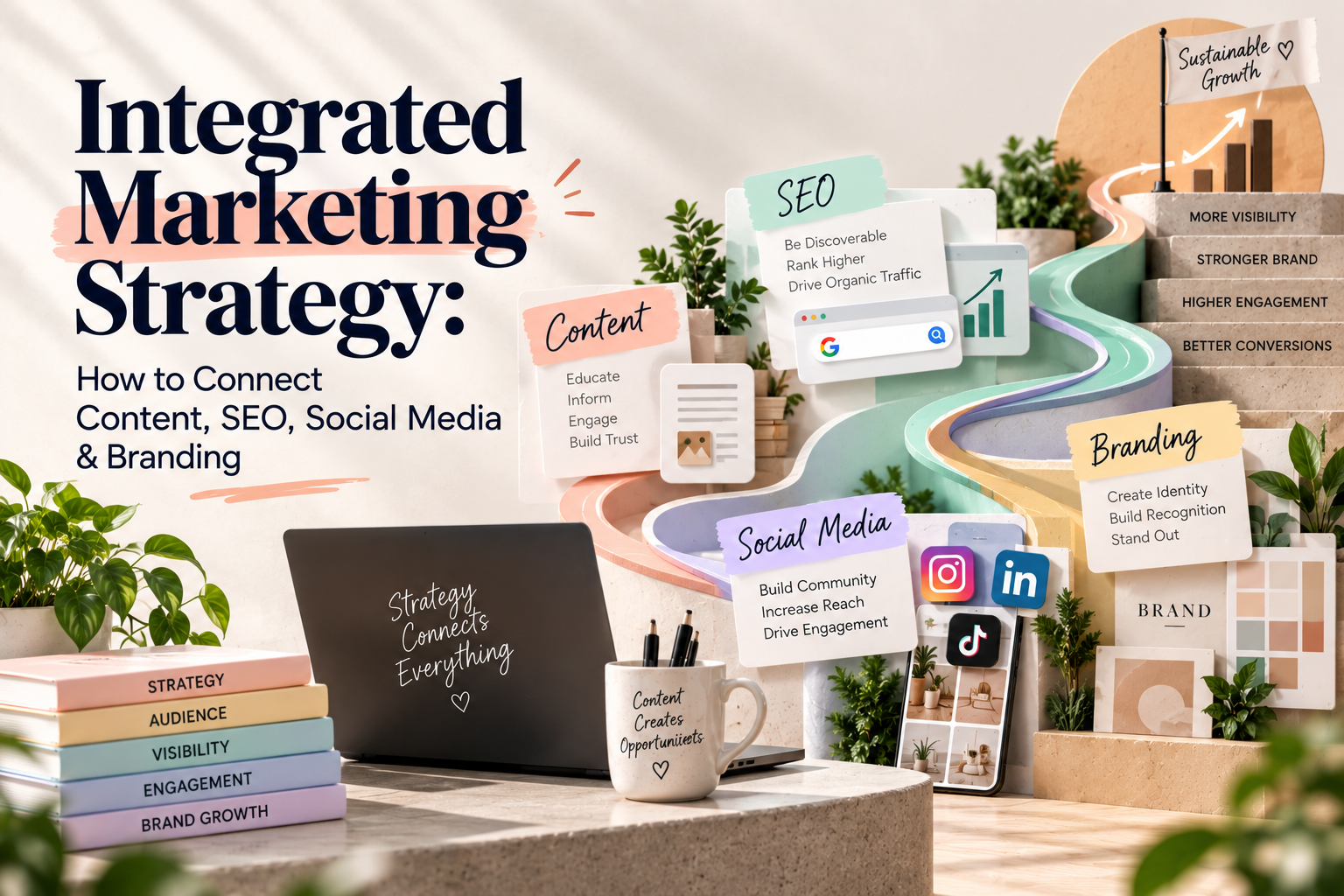
That’s what happens when content, SEO, social media and branding run as separate jobs. An integrated marketing strategy connects them so each channel supports the others, and one idea does the work of five. This guide covers 5 steps to build one, with examples for clinics, real estate firms and B2B brands, plus a weekly rhythm to keep it running.
Key Takeaways
- An integrated marketing strategy links content, SEO, social media and branding around one goal and one message.
- Branding sets what you say, SEO shows what people search for, content answers it, and social spreads it.
- One core topic a month can feed a blog, several social posts and an email, which saves time and budget.
- Shared goals and one dashboard let you judge your integrated marketing strategy as a whole.
What Goes Wrong When Every Channel Works Alone
Most brands never plan to be disconnected. They hire a writer, then a social media freelancer, then an SEO agency, and each one gets its own brief. A real estate firm ends up with Instagram posts about lifestyle, blogs about home loans and ads about a new launch, with no thread linking them.
The result is mixed messages and wasted effort. Search visitors land on pages that don’t match the social campaign, and followers never see the useful content sitting on the blog. A digital marketing strategy works when every piece points the same way, and that’s the gap an integrated marketing strategy fills.
Five Steps to an Integrated Marketing Strategy That Holds Together
1. Set one business goal every channel serves
Every integrated marketing strategy begins with one outcome. Pick the result that matters most this quarter, such as consultation bookings, site visit requests or demo calls. Then decide how each channel contributes: SEO brings people in, content answers their questions, social builds trust, and branding makes you recognisable.
A MedSpa that wants more HydraFacial bookings can rank a treatment page, publish a blog on who the facial suits, and share before-and-after posts with client consent. The same offer and tone run through all three, and every piece points to one booking page.
2. Lock your brand message before you create anything
Write a one-page brand guide covering who you serve, what you promise and how you sound. Add three or four key messages, the words you always use and the words you avoid. This page becomes the brief for your writer, designer and social team.
Without it, your website might sound formal while your Instagram sounds playful and your ads sound pushy. People notice the mismatch, and trust drops. With it, every channel in your integrated marketing strategy sounds like the same company.
3. Let search data choose your topics
SEO shows you what your audience is already asking. Use Google’s “People also ask” box, Search Console queries and keyword tools to list the questions people type before they buy. This is where content and SEO meet, and it keeps your integrated marketing strategy based on real demand.
For a B2B software brand, a search like “how to automate payroll for a small team” can become a blog, a LinkedIn carousel and a sales email. Our guide on how to find content ideas shows more places to find these questions.
4. Create one core piece, then repurpose it
An integrated content strategy works best when one strong piece feeds everything else. Publish one detailed blog post or video each month, then break it down:
- Social media: Turn the main points into a carousel, a Reel script and three short posts.
- Email: Send a summary with a link back to the full post.
- Sales and ads: Use the strongest line in an ad or a WhatsApp message to warm leads.
A real estate advisor’s blog on ready-to-move versus under-construction flats can fill a month of social posts. Each post sends readers back to the page you want to rank, so social and SEO lift each other.
5. Track shared numbers in one place
Judge the system as a whole. Pick four or five numbers tied to your goal, like organic traffic, social reach, enquiries and cost per lead, and review them together in one simple dashboard every month.
Tag every link you share on social and email using Google’s Campaign URL Builder, so you can see which posts bring visits and leads. When results dip, you’ll know whether to fix the message, the topic or the format.
A Weekly Rhythm That Keeps Every Team in Sync
Planning an integrated marketing strategy once is easy. Keeping four channels connected week after week takes a routine everyone follows, and this one suits small teams and agencies alike.
Monday planning call – Spend 30 minutes agreeing on the week’s core topic, key message and the page every post should link to.
Midweek content check – Review drafts against the brand guide so the blog, captions and designs use the same words and the same offer.
Friday numbers review – Look at traffic, reach and enquiries, then note one thing to repeat and one thing to change next week.
This rhythm keeps SEO and social media feeding each other. Blog posts give your social team something useful to share, and social engagement shows your writer which topics deserve a longer piece. Keep your Google Business Profile in the loop too, since posts and reviews there reinforce the same message in local search.
One Message, Four Channels, More Enquiries
An integrated marketing strategy turns content, SEO, social media and branding into one system with one goal. Set the goal, lock your message, let search data pick topics, repurpose one strong piece and track shared numbers. This week, write your one-page brand guide and share it with everyone who creates content for you.
If you’d like one team to run all four, idatecontent plans and delivers content, SEO, social media and branding as a single integrated marketing strategy for clinics, real estate firms and B2B brands. If you’re comparing options for an SEO agency in Gurgaon, ask how they connect their SEO work to your social media and brand.