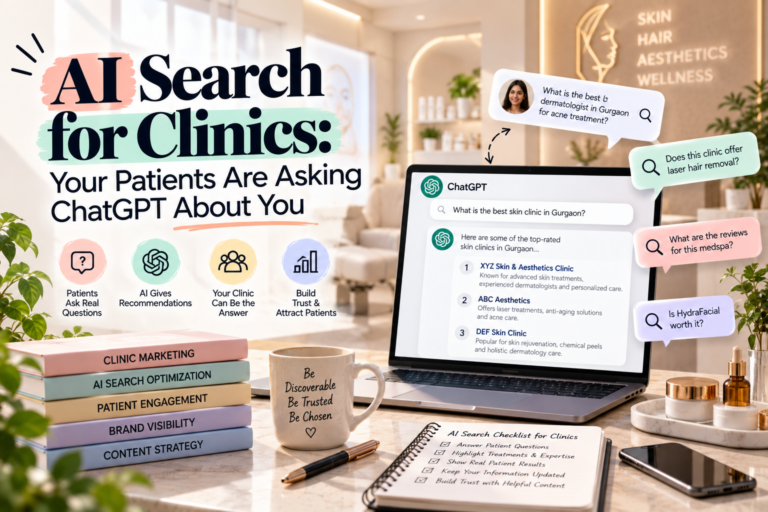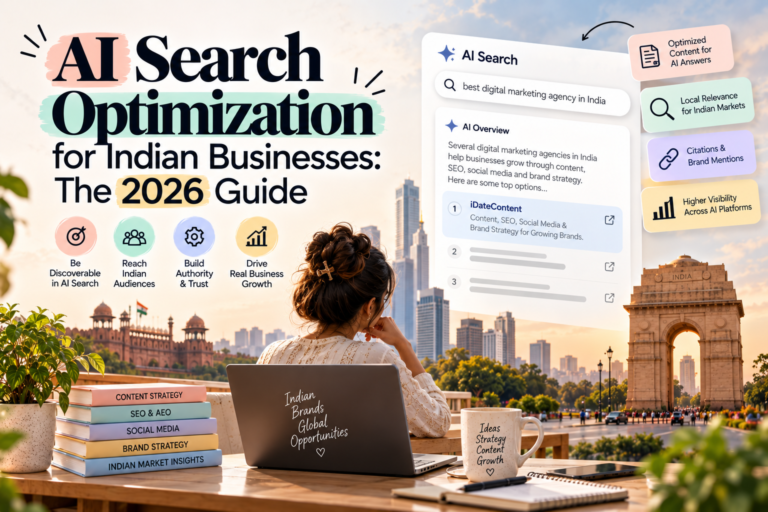
Search results don’t look the way they did two years ago. Ask Google a question today and you often get a written answer at the top, with three or four small source links beside it. Your customer reads the answer, gets what they needed, and never scrolls.
Answer engine optimization is how you get your brand into that answer. It’s the practice of writing and structuring content so AI-powered tools, including Google AI Overviews, ChatGPT, Perplexity and voice assistants, can pull a clear answer from your page and credit you as the source.
It doesn’t replace your SEO work. It changes what you do with the content you already have, so machines can find a specific answer on your page and lift it cleanly.
This guide covers what AEO is, how it differs from SEO and GEO, and seven steps you can apply to your own pages this week.
Key Takeaways
- AEO makes your content easy for AI tools to extract, understand and cite.
- The core format is a question as the heading with a 40 to 60 word answer directly below it.
- AI systems favour content with specific numbers, named sources, clear structure and consistent brand information across the web.
- You can measure AEO by testing a fixed list of buyer questions each month and tracking AI referral traffic in GA4.
Why Answer Engine Optimization Matters Now
AI answers are no longer a side feature. Google announced at I/O 2026 that AI Mode crossed 1 billion monthly users within twelve months of launch, while AI Overviews reach 2.5 billion monthly users. BrightEdge data from February 2026 put AI Overviews on roughly 48 to 50% of US Google searches, up from about 6.5% in January 2025.
The click behaviour is the part that should get your attention. A Pew Research Center study of 68,879 searches found that users clicked a traditional result in 8% of visits when an AI summary appeared, compared with 15% when it didn’t. They clicked a link inside the summary itself in only 1% of visits.
Read those together and the shift is clear. Ranking still matters, because AI tools draw from pages that already rank. But ranking alone no longer guarantees a visit. Being named in the answer is now part of the job.
AEO vs SEO vs GEO: What’s the Difference?

These three overlap heavily, which is why most articles blur them. Here’s the practical split:
| Category | What it targets | What success looks like | Main lever |
|---|---|---|---|
| SEO | Position in the list of blue links | Higher rankings and clicks | Relevance, authority, technical health |
| AEO | The direct answer slot in AI Overviews, featured snippets and voice | Your page is the quoted answer | Clear, extractable answers to specific questions |
| GEO | Mentions inside longer AI responses in ChatGPT, Perplexity and Gemini | Your brand is named and linked | Entity consistency and off-site presence |
You don’t choose one. SEO gets your page indexed and ranked, AEO makes a passage on it quotable, and GEO builds the reputation signals that make AI tools comfortable naming you. Treat AEO as a layer of content optimization on top of the SEO content you already publish.
How to Do Answer Engine Optimization: 7 Steps
Step 1: Find out where you stand today
Before changing anything, check what AI tools currently say about your category. Write down 20 to 30 questions a buyer would ask before purchasing from you. Run each one in Google, ChatGPT, Perplexity and Gemini, and record three things: whether your brand appears, which sites get cited, and what the answer gets wrong.
This takes about an hour and gives you a baseline. It usually also shows that the sites being cited aren’t the ones ranking first. That gap is your opening.
Step 2: Build your question list from real language
Your next posts should answer questions people actually type, in their words. Pull from four sources:
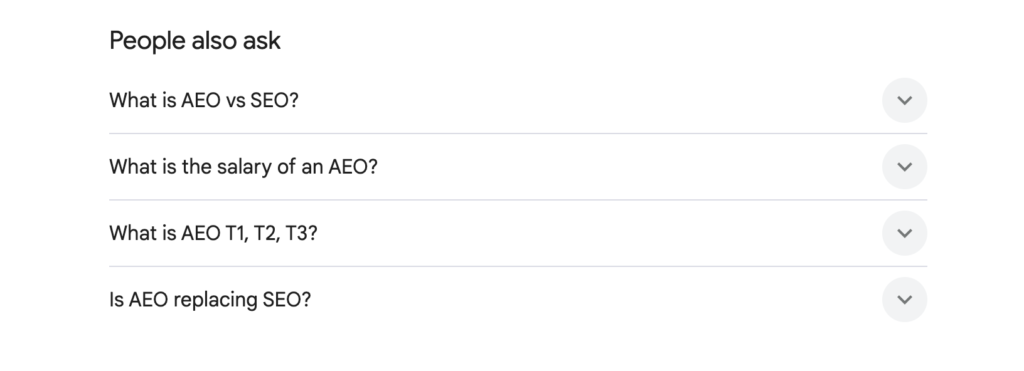
- Google’s “People also ask” box for your main topics
- Google Search Console queries starting with how, what, why, can or is
- Reddit and Quora threads in your niche
- Your own sales calls, DMs and enquiry forms
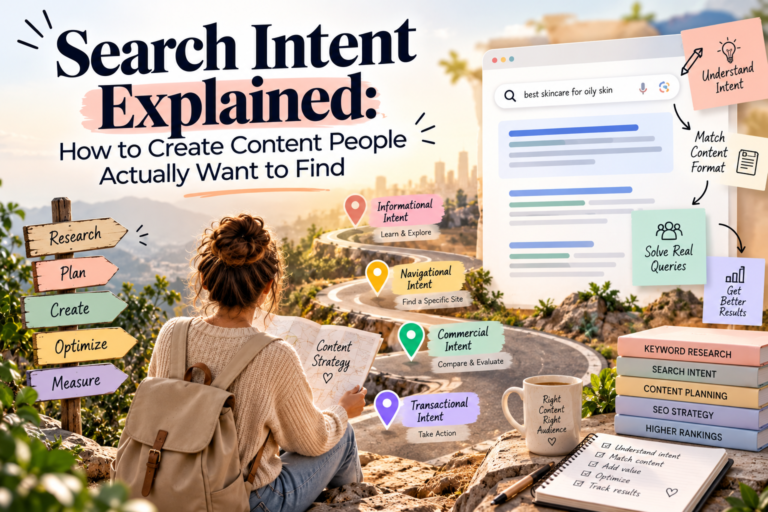
Question phrasing matters more than it used to. Pew found that 60% of searches beginning with question words such as who, what, when or why produced an AI summary, compared with just 8% of one or two word searches. Long, conversational queries are where AEO gets decided.
Step 3: Answer in the first 40 to 60 words, under a question heading
This is the single highest-return change. Make the question your H2 or H3, then answer it immediately. Use a simple pattern: name the thing, place it in a category, say what it does, add one detail that makes it specific.
The difference in practice:
Before: “There are several factors that determine how long a website migration takes, and every project is different depending on the scope involved.”
After: “A website migration usually takes four to eight weeks for a site under 500 pages. The timeline covers a content audit, URL mapping, redirect setup, staging tests and post-launch monitoring. Sites with multiple languages or a store typically need the full eight weeks.”
The second version can be lifted as it is. The first says nothing a machine can use. For reference, the typical AI summary in Pew’s study ran 67 words, so a tight 40 to 60 word answer fits neatly inside one.
Step 4: Write passages that survive on their own
AI tools extract chunks, not pages. Any paragraph that opens with “as mentioned above” or “this is why it works” becomes meaningless once pulled out of context.
Three habits fix this:
- Name the subject at the start of each paragraph instead of using “it” or “this”
- Keep one idea per paragraph, roughly 40 to 80 words
- Repeat key terms rather than relying on pronouns across sections
Then match the format to the content. Steps belong in numbered lists, comparisons belong in real HTML tables, and definitions belong in a short bolded line. Never put a comparison table inside an image, because nothing can read it.
Step 5: Add structured data and author signals
Schema markup labels the parts of your page for machines. Add Article schema with an author and dates on every blog, Organization schema on your homepage, and FAQPage schema on genuine question-and-answer sections.
Google has limited FAQ rich results to a small set of authoritative sites since 2023, so don’t expect the visual dropdowns to return. The markup still helps any system parse your questions and answers correctly. Pair it with a real author bio, credentials, a publish date and a visible “last updated” date. Validate everything in Google’s Rich Results Test before publishing.
Step 6: Give AI something worth quoting
Generic content doesn’t get cited because there are a thousand versions of it. Specific content does. Replace soft claims with numbers, names and dates.
“Many buyers prefer ready-to-move homes” gives an AI system nothing. “Ready-to-move units accounted for X% of Gurugram sales in 2025, according to [named report]” gives it a fact worth attributing. Every statistic needs a source and a year.
Your own data is the strongest material here. Pricing ranges, average project timelines, survey results from your client base and before-and-after numbers can’t be found anywhere else, which makes them the easiest thing for AI tools to credit to you.
Step 7: Build consistency and presence off your website
AI systems check what the rest of the web says about you. Keep your brand name, service list, location and one-line description identical across your website, Google Business Profile, LinkedIn, Clutch, JustDial and industry directories. Contradictions make a model less confident about naming you.
Community platforms matter too. Pew found that Wikipedia, YouTube and Reddit were the most commonly linked sources in AI summaries, together making up 15% of the sources listed. A genuinely helpful answer in a relevant Reddit thread or a short YouTube explainer can reach systems your website alone won’t.
Finally, check your robots.txt file. Many sites block AI crawlers through a security plugin without realising it. Confirm that Googlebot, Bingbot, OAI-SearchBot and PerplexityBot can access your pages, and that your main content loads in the HTML rather than only through JavaScript.
How to Measure AEO Results
AEO doesn’t come with a rank tracker, so build a simple monthly check:
- Re-run the 20 to 30 prompts from Step 1 and log whether your brand appears, is linked, or is missing.
- In GA4, track referral traffic from chatgpt.com, perplexity.ai and gemini.google.com.
- In Search Console, watch pages where impressions climb while clicks stay flat, which often means your content is feeding answers without earning the visit.
- Ask new leads where they heard about you. “ChatGPT suggested you” is becoming a common reply, and it won’t show up in any analytics tool.
Give it three to six months. Pages that already rank tend to show up in AI answers within weeks of being restructured, while new pages need to earn rankings first.
Common AEO Mistakes to Avoid

- Burying the answer – If the response to your heading arrives in paragraph five, it won’t be extracted.
- Publishing thin FAQ pages – Twenty one-line answers with no depth help nobody and rarely get cited.
- Stuffing schema onto content that doesn’t match it – Markup describes your page, it doesn’t upgrade it.
- Writing for machines only – AI tools evaluate pages that people also find useful. Clarity serves both.
- Chasing every platform at once – Start with the two your buyers actually use.
Should You Do AEO In-House or Hire an Agency?
You can handle a lot of this yourself. Steps 2, 3, 4 and 6 need a good editor and a checklist, not a specialist. If your team can restructure pages and run the monthly prompt check, start there.
Bring in help when you have dozens of pages to rework, need schema and technical fixes, or can’t keep up the measurement routine. If you’re shortlisting the best SEO agency in Gurgaon for this work, ask three questions: how do you track AI citations, can you show a page you restructured for AEO with the before-and-after, and which schema types do you implement as standard. Vague answers tell you everything.
Talk to our team → idatecontent
Start With One Page
Answer engine optimization isn’t a rebuild. It’s a set of editing habits: put the real question in the heading, answer it in the first 50 words, write passages that stand alone, back claims with named facts, and keep your brand details consistent everywhere.
Pick your best-performing page, apply those five changes this week, and re-run your prompt check next month. If you’d rather have a team audit your site and handle the rewrites, idatecontent builds SEO optimized content designed to rank and get cited.